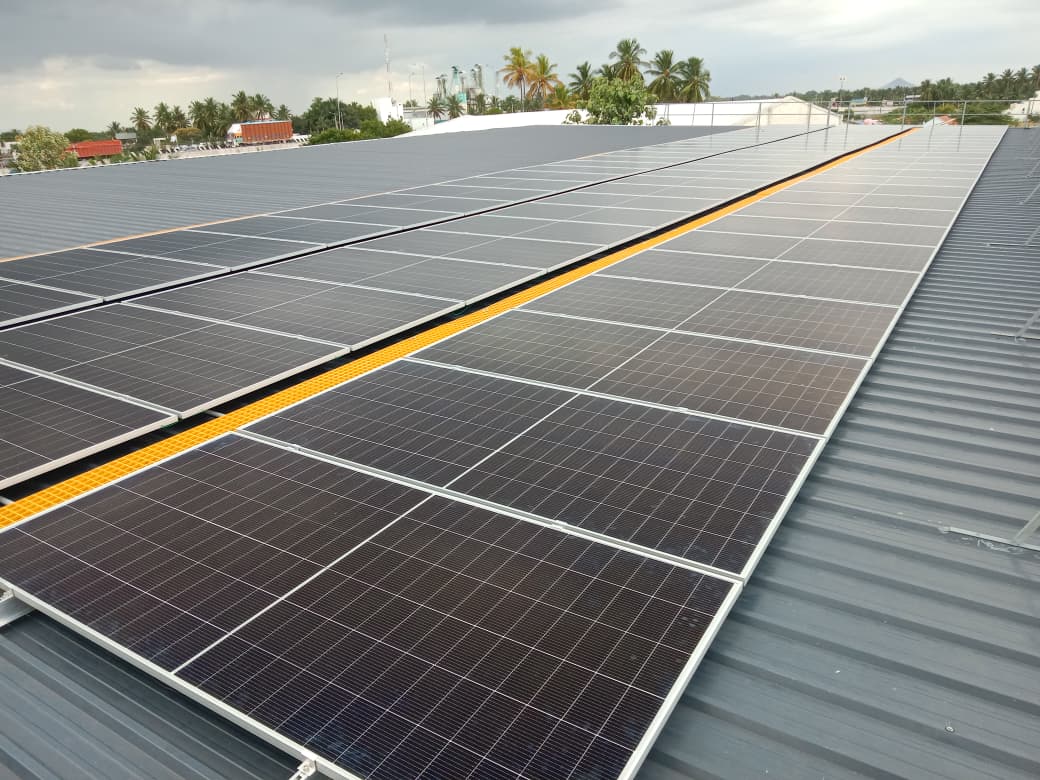
Solar panels
Capture sunlight and generate electricity.

Our Services
From design and permitting to commissioning and monitoring — engineered for commercial and industrial performance.
View all services →India
Make your home more energy-efficient with reliable residential rooftop solar panels from Kyra Photon Tech. As electricity consumption continues to grow, homeowners are exploring solar energy as a practical way to generate their own power, manage electricity expenses and reduce dependence on conventional energy sources.
Whether you own an independent house, a villa or a residential property, installing the right rooftop solar system can help you make better use of available roof space. Kyra Photon Tech helps homeowners explore suitable solar rooftop solutions based on their energy requirements, property conditions and installation objectives.
Looking to switch to solar energy? Explore residential solar solutions designed around your household's electricity needs.
Get a Free Quote
Share the home, electricity consumption, and roof details.
How they work
Residential rooftop solar panels are photovoltaic (PV) modules installed on the roofs of homes to convert sunlight into electricity. These systems use solar cells to generate direct current (DC) electricity, which an inverter converts into alternating current (AC) for household appliances.
A typical residential rooftop solar system includes:
Solar panels
Capture sunlight and generate electricity.
Solar inverter
Converts DC electricity into usable AC power.
Mounting structures
Secure panels to the rooftop.
Electrical components
Support safe power distribution and system operation.
Monitoring system
Helps homeowners track solar energy generation and system performance.
Depending on the configuration, a rooftop solar system can supply electricity directly to your home, work with the utility grid or include battery storage for backup applications.
Home energy
Investing in solar rooftop solutions allows homeowners to generate renewable electricity using available rooftop space. A properly designed system can offer several long-term advantages.
Potential electricity bill savings
Generate electricity during daylight hours and reduce the amount of power purchased from the grid.
Renewable energy generation
Use sunlight to produce cleaner electricity for everyday household requirements.
Better rooftop utilisation
Convert unused roof space into a productive energy-generating area.
Long-term energy planning
Reduce exposure to changes in conventional electricity tariffs, subject to applicable billing arrangements.
Lower environmental impact
Support the transition towards renewable energy.
Flexible system configurations
Choose on-grid, off-grid or hybrid systems depending on your property and energy requirements.
The actual savings depend on system capacity, electricity consumption, rooftop conditions, tariffs and applicable net-metering regulations.
System types
Choosing the right solar configuration is essential for getting the best results from your investment. Most residential rooftop solar panels in India are installed using one of three system configurations.
An on-grid solar system connects your rooftop solar installation to the local electricity grid. Solar energy powers household appliances during generation hours, while excess electricity may be exported to the grid through an approved net-metering arrangement.
Best suited for: Homes with a reliable grid connection that want to reduce electricity purchases.
An off-grid solar system operates independently of the electricity grid and generally uses batteries to store excess solar energy. Stored electricity can power selected household appliances when sunlight is unavailable.
Best suited for: Properties in locations with limited or unreliable grid connectivity.
A hybrid solar system combines solar panels, grid connectivity and battery storage. It allows homeowners to use solar-generated electricity, store surplus energy and draw electricity from the grid when required.
Best suited for: Homeowners who want renewable energy generation with additional backup flexibility.
How to choose
Selecting the right solar system involves more than comparing panel prices. Your household's electricity consumption and rooftop conditions determine the appropriate system configuration.
Consider these factors before choosing a residential solar installation:
Monthly electricity consumption
Review your electricity bills to understand your average energy requirements.
Available rooftop space
Check whether your roof has sufficient shadow-free area for panel installation.
Solar panel efficiency
Compare panel technologies, efficiency ratings and product specifications.
Inverter selection
Choose an inverter compatible with your system capacity and configuration.
Battery requirements
Determine whether battery storage is necessary for your household.
Installation quality
Evaluate equipment specifications, electrical safety, workmanship and after-sales support.
For example, a household with higher daytime electricity consumption may benefit from a grid-connected solar configuration, while a home requiring backup during power interruptions may consider a hybrid system.
Installation
A properly planned installation helps ensure that your rooftop solar system meets your household's electricity requirements.
The typical installation process involves:
1. Initial consultation
Discuss your electricity consumption, budget and solar requirements.
2. Site inspection
Evaluate rooftop space, orientation, shading and structural suitability.
3. System design
Determine the appropriate solar capacity, inverter and equipment configuration.
4. Equipment selection
Choose suitable photovoltaic panels, mounting structures and electrical components.
5. Installation
Install the panels, inverter, wiring and associated safety equipment.
6. Testing and commissioning
Verify system performance, electrical safety and grid connectivity requirements.
Working with experienced rooftop solar power companies helps homeowners plan the installation around their property's technical requirements.
PM Surya Ghar
Homeowners considering residential rooftop solar panels can explore the PM Surya Ghar: Muft Bijli Yojana, a Government of India initiative supporting residential rooftop solar adoption.
Under the central scheme, eligible residential consumers can receive Central Financial Assistance (CFA) based on applicable capacity limits:
| Solar capacity | Central subsidy |
|---|---|
| First 1 kW | ₹30,000 |
| 2 kW system | ₹60,000 |
| 3 kW system | ₹78,000 |
| Above 3 kW | Maximum ₹78,000 |
These are the standard general-category subsidy amounts under the scheme, subject to current eligibility and guidelines.
The application process generally involves registering on the official national portal, selecting an eligible registered vendor, completing the installation and obtaining the required DISCOM inspection and commissioning approval.
For homeowners exploring Tamil Nadu Solar Rooftop installations, local electricity distribution procedures and applicable state-level provisions should also be checked before proceeding.
Visit the official PM Surya Ghar National Portal for current eligibility, application procedures and subsidy information.
Home solar
Choosing the right solar partner is just as important as selecting the right solar panels. Kyra Photon Tech provides solar EPC solutions covering rooftop solar systems, engineering, procurement, construction, monitoring and operations and maintenance.
With rooftop solar solutions for homes, commercial buildings and industrial facilities, Kyra Photon Tech focuses on designing solar installations around site requirements and energy objectives.
Why consider Kyra Photon Tech?
Rooftop solar solutions
Explore grid-connected rooftop solar installations for residential properties.
System planning
Evaluate suitable solar configurations based on your property's requirements.
End-to-end EPC capabilities
Access solar project services covering design, procurement and construction.
Monitoring and maintenance
Explore ongoing solar plant monitoring and O&M capabilities.
Flexible solar solutions
Discuss suitable configurations for different installation requirements.
Whether you are planning a new residential rooftop solar installation or exploring ways to improve your property's energy efficiency, Kyra Photon Tech can help you understand the available solar options.
Explore our Solar Services to learn more about our solar solutions.
Ready to make your home solar-powered?
Get in touch with Kyra Photon Tech to discuss your rooftop space, electricity consumption and residential solar installation requirements.
Make a smarter move towards renewable energy with residential rooftop solar solutions designed around your requirements.
The cost depends on system capacity, solar panel technology, inverter specifications, mounting structures, installation requirements and battery storage. Government subsidies may reduce the eligible upfront cost. Request a site-specific quotation to understand the complete installation investment.
Chennai office
Start Your Solar Journey with Kyra Photon Tech
Make a smarter move towards renewable energy with residential rooftop solar solutions designed around your requirements.