Solar Energy Generation
Solar panels capture sunlight and convert it into DC electricity.

Our Services
From design and permitting to commissioning and monitoring — engineered for commercial and industrial performance.
View all services →India
Looking to reduce your electricity bills and make better use of solar energy? An on grid solar system is an effective solution for residential and commercial properties connected to the electricity grid. By generating electricity from sunlight, these systems help reduce dependence on conventional power and make solar energy a practical part of everyday electricity consumption.
Whether you are planning a rooftop solar installation for your home, office, commercial building, or industrial facility, choosing the right system capacity and components is essential for long-term performance.
Kyra Photon Tech helps customers explore solar energy solutions based on their electricity requirements and installation needs. Discover the possibilities of an on-grid solar system and take the next step towards more efficient energy consumption.
Get a Free Quote
Share the property type, electricity consumption, and installation location.
Grid-tied solar
An on grid solar system, also known as a grid-connected or grid-tied solar system, is a solar power installation connected directly to the local electricity grid. It uses solar panels to generate electricity from sunlight and a grid-tied inverter to convert the generated direct current (DC) into alternating current (AC), which powers electrical appliances.
Unlike conventional off-grid systems, an on-grid solar system does not typically require batteries for everyday operation. When solar generation exceeds your property's electricity consumption, surplus electricity may be exported to the grid through an approved net-metering or applicable billing arrangement.
When solar generation is insufficient, electricity can be drawn from the utility grid. This makes on-grid solar systems a practical option for homes and businesses with reliable grid connectivity.
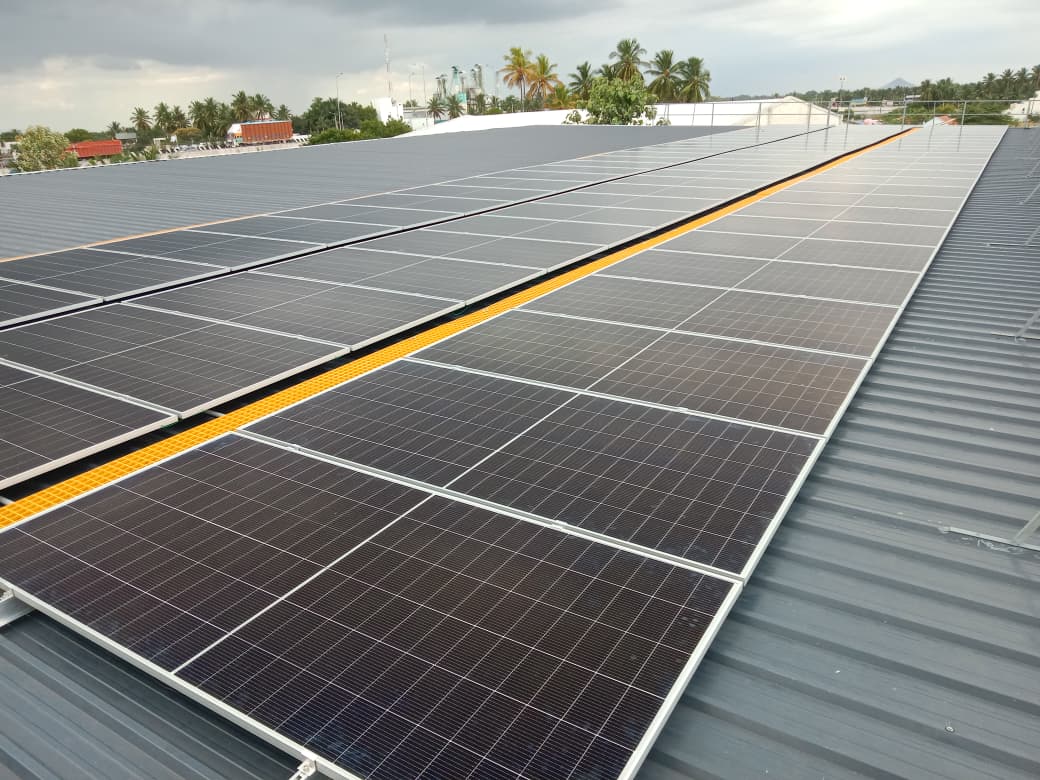
Five stages
An on-grid solar system operates through a coordinated combination of solar panels, an inverter, and the electricity grid.
Here is how the process works:
Solar Energy Generation
Solar panels capture sunlight and convert it into DC electricity.
Power Conversion
The grid-connected inverter converts DC electricity into AC electricity suitable for household and commercial appliances.
Electricity Consumption
The generated solar power is used to operate lights, fans, air conditioners, computers, and other electrical equipment.
Excess Power Export
When solar generation exceeds consumption, surplus electricity may be exported to the grid, subject to applicable utility arrangements.
Grid Electricity Supply
During periods of low solar generation, electricity is supplied by the utility grid.
This arrangement allows property owners to utilise solar energy during daylight hours while retaining access to conventional grid electricity.
System parts
A properly designed on-grid solar installation includes several essential components:
Solar Panels
Capture sunlight and generate DC electricity.
Grid-Tied Solar Inverter
Converts DC electricity into usable AC electricity and synchronises with the utility grid.
Net Meter
Measures electricity imported from and exported to the grid, where the applicable utility arrangement supports it.
Mounting Structures
Secure solar panels to rooftops or other suitable installation areas.
Electrical Protection Equipment
Includes appropriate isolators, earthing, surge protection, and other safety components.
Selecting suitable components based on system capacity, site conditions, and technical requirements helps support reliable solar energy generation.
Homes and businesses
An on grid solar system for home installations can help households utilise rooftop space to generate electricity and potentially reduce their monthly power expenses.
These systems are also suitable for several commercial applications, including:
Independent houses and residential buildings.
Apartments and housing communities.
Corporate offices and IT buildings.
Retail shops and commercial complexes.
Schools, colleges, and educational institutions.
Factories and industrial facilities.
The appropriate solar capacity depends on electricity consumption patterns, available rooftop space, roof orientation, shading conditions, and local electricity regulations.
A site assessment can help determine the most suitable system configuration for your property.
Why on-grid
Installing an on-grid solar system offers several practical advantages for residential and commercial electricity consumers.
1. Potential Electricity Bill Reduction
Solar panels generate electricity during daylight hours, allowing properties to use solar power instead of purchasing the same amount of electricity from the grid.
2. Lower Initial Investment
Since standard on-grid systems do not require battery storage, their initial installation cost can be lower than comparable off-grid systems that include batteries.
3. Better Utilisation of Solar Energy
Electricity generated by rooftop solar panels can directly support everyday energy requirements.
4. Opportunity for Excess Electricity Export
Surplus electricity may be supplied to the grid through approved net-metering or other applicable billing arrangements.
5. Reduced Dependence on Conventional Electricity
Generating electricity from sunlight can reduce the amount of power a property needs to purchase from the utility.
6. Environmentally Responsible Energy Consumption
Solar energy helps reduce reliance on conventional electricity generation and supports cleaner energy adoption.
What affects price
The on grid solar system price in India depends on several factors, including the installed capacity, solar panel technology, inverter specifications, mounting structures, electrical components, and installation requirements.
The major factors influencing the overall cost include:
System Capacity
The required capacity in kilowatts (kW) based on electricity consumption.
Solar Panel Quality
Panel technology, efficiency, specifications, and manufacturer.
Inverter Selection
The capacity and technical features of the grid-connected inverter.
Installation Requirements
Rooftop structure, mounting arrangements, wiring, and electrical protection.
Location and Regulations
Local DISCOM requirements, applicable metering arrangements, and approval procedures.
Government subsidies may be available for eligible residential installations under applicable schemes, subject to current guidelines and approved vendor requirements. Commercial installations generally have different eligibility conditions.
Instead of choosing a system based only on the lowest price, consider component quality, installation suitability, technical specifications, and long-term requirements.
Planning to install solar at your property?
Side by side
Both systems generate electricity using solar panels, but their configurations and applications differ.
| Feature | On-Grid Solar | Off-Grid Solar |
|---|---|---|
| Grid Connection | Connected to utility grid | Independent of grid |
| Battery Storage | Generally not required | Required |
| Initial Investment | Generally lower | Generally higher |
| Power During Grid Outages | Standard systems shut down | Available through battery storage |
| Suitable For | Grid-connected properties | Areas requiring independent power |
An on-grid solar system is generally suitable for properties with reliable electricity grid connectivity and a focus on reducing electricity purchases.
An off-grid system may be more appropriate where grid electricity is unavailable or independent backup is essential. Hybrid systems can also be considered when customers need grid connectivity alongside battery backup.
Plan the system
Choosing the right solar solution involves more than selecting solar panels. Understanding electricity consumption, evaluating rooftop conditions, selecting appropriate system components, and considering local installation requirements are equally important.
Kyra Photon Tech provides an opportunity for residential and commercial customers to explore solar energy solutions based on their project requirements.
When considering an on-grid solar installation, discuss the following with the team:
Your monthly electricity consumption.
Suitable solar system capacity.
Available rooftop installation space.
Solar panel and inverter specifications.
Estimated project investment.
Applicable net-metering and utility approval requirements.
Whether you are considering a residential rooftop installation or a larger commercial solar project, contact Kyra Photon Tech to discuss your requirements and explore suitable options.
Next step
Switching to solar energy can be a practical step towards managing electricity expenses and making better use of renewable energy.
An on grid solar system allows homes and businesses to generate electricity from sunlight while remaining connected to the utility grid. With the right system configuration, it can support everyday electricity requirements and improve the utilisation of available rooftop space.
Connect with Kyra Photon Tech to discuss your solar installation requirements, understand suitable system configurations, and request a customised quotation.
A solar on-grid system is a grid-connected solar power installation that generates electricity using solar panels. It supplies electricity to connected appliances and can export surplus power to the utility grid through an approved metering arrangement.
Chennai office
Get Started with an On Grid Solar System Today
Connect with Kyra Photon Tech to discuss your solar installation requirements, understand suitable system configurations, and request a customised quotation.