1. Solar power generation
Photovoltaic panels absorb sunlight and produce DC electricity.

Our Services
From design and permitting to commissioning and monitoring — engineered for commercial and industrial performance.
View all services →Homes and businesses
An on-grid solar system is a grid-connected solar power solution that generates electricity using photovoltaic (PV) panels while remaining connected to the utility electricity network. It allows homes, offices and commercial establishments to use solar-generated electricity and draw additional power from the grid whenever required.
Kyra Photon Tech provides solar energy solutions for property owners exploring residential and commercial solar installations. Whether you are considering an on-grid solar system for your home, planning a commercial solar plant or evaluating rooftop solar options, selecting the right system involves understanding electricity consumption, available installation space, inverter capacity and grid connection requirements.
Explore how an on-grid solar power system works, its components, installation requirements and the factors to consider before choosing a solar solution.
Get a Free Quote
Share the property, electricity consumption, and installation details.
Grid-connected
An on-grid solar system is a photovoltaic electricity generation system connected to the utility electricity grid. Solar panels convert sunlight into direct current (DC) electricity, and a grid-connected inverter converts that electricity into alternating current (AC) for use by connected electrical appliances.
The electricity generated by the solar panels can be consumed within the property. When solar generation is insufficient, electricity can be drawn from the utility grid. If the system generates more electricity than the property consumes, surplus power may be exported to the grid under an approved metering arrangement.
An on-grid solar system is also known as a grid-connected solar system, grid-tied solar system or on-grid solar PV system.
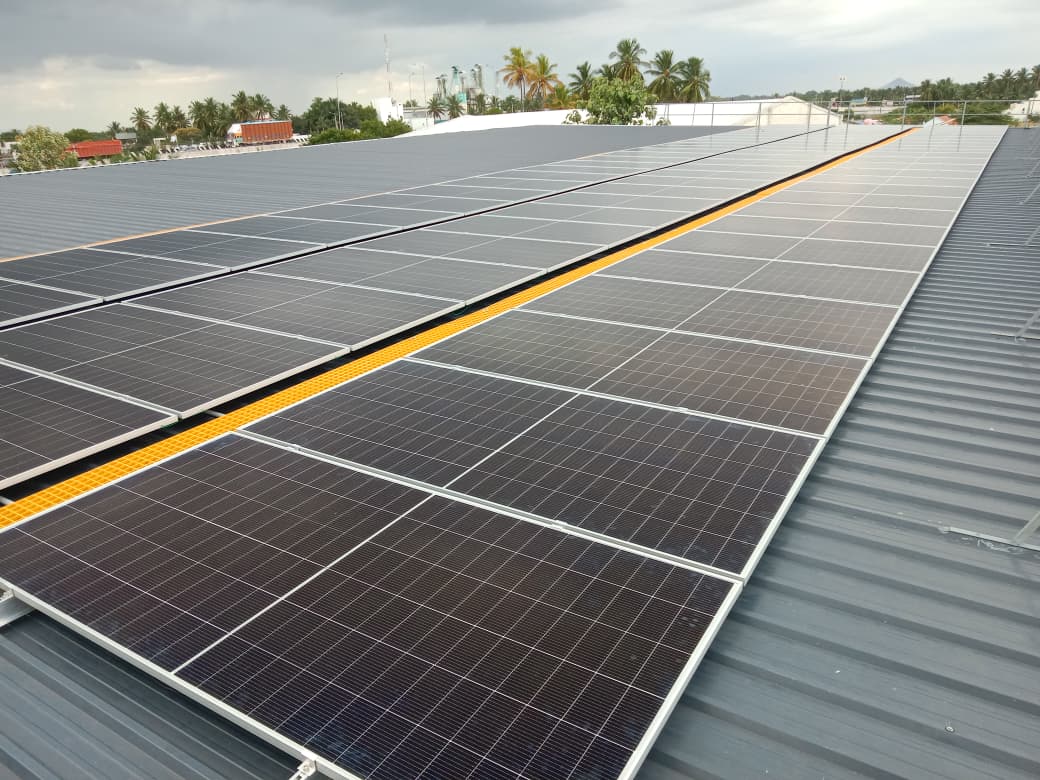
| Feature | Description |
|---|---|
| System type | Grid-connected solar PV system |
| Main equipment | Solar panels and grid-connected inverter |
| Electricity generation | Converts sunlight into electrical energy |
| Battery requirement | Generally not required |
| Grid connection | Connected to the utility network |
| Excess electricity | May be exported under applicable regulations |
| Common applications | Homes, offices and commercial buildings |
| Power backup | Not available with a standard grid-tied configuration during grid outages |
How it works
An on-grid solar power system generates electricity from sunlight and coordinates its output with the utility electricity grid. The solar inverter converts the DC electricity generated by the panels into AC electricity that can supply the property's electrical loads.
The process involves five main stages:
1. Solar power generation
Photovoltaic panels absorb sunlight and produce DC electricity.
2. DC-to-AC conversion
A grid-connected inverter converts the generated DC electricity into AC power.
3. Electricity consumption
The generated electricity supplies compatible electrical loads within the building.
4. Grid electricity supply
When solar generation is lower than consumption, the property draws the remaining electricity from the utility grid.
5. Surplus electricity export
When solar generation exceeds the property's consumption, eligible surplus electricity can be exported through an approved grid connection.
The actual energy accounting depends on the electricity meter, approved connection arrangement and applicable electricity regulations.
Equipment
An on-grid solar PV system consists of interconnected electrical and mechanical components that support electricity generation, conversion, protection and grid connectivity.
Why install
An on-grid solar system helps property owners generate electricity from sunlight while retaining access to the utility electricity network.
The main benefits include:
Homes
A residential on-grid solar system is designed to generate electricity for household consumption while maintaining a connection to the existing utility grid.
The right system capacity depends on monthly electricity usage, daytime consumption, rooftop availability, shading conditions and the property's electrical connection.
Before installing an on-grid solar system for home use, homeowners should evaluate:
Average monthly electricity consumption.
Daytime electricity usage patterns.
Available rooftop installation area.
Roof direction, inclination and shading.
Solar panel and inverter capacity.
Existing electrical connection and sanctioned load.
Applicable net metering and grid-export regulations.
A household that uses more electricity during daylight hours may directly consume a larger proportion of its solar generation. Households with higher evening consumption should also evaluate their electricity import and export arrangements.
A professional site assessment can help determine whether an on-grid home solar system is suitable for the property.
Businesses
A commercial on-grid solar system enables businesses to generate electricity through solar panels while remaining connected to the utility grid.
These systems may be suitable for manufacturing facilities, warehouses, offices, educational institutions, commercial buildings and other establishments with suitable installation areas and electricity connections.
Commercial solar plant planning should consider:
Total electricity consumption.
Daytime electricity demand.
Maximum demand and sanctioned load.
Available rooftop or ground-mounted space.
Solar PV panel capacity.
Inverter configuration.
Grid-interconnection requirements.
Electrical protection and monitoring arrangements.
For businesses with significant daytime electricity consumption, an appropriately designed commercial on-grid solar plant may help reduce dependence on grid electricity.
The final system capacity and expected energy generation should be established through technical assessment rather than a standard capacity recommendation.
System types
On-grid, off-grid and hybrid solar systems differ mainly in their connection to the utility grid and their use of battery storage.
| Comparison | On-Grid Solar | Off-Grid Solar | Hybrid Solar |
|---|---|---|---|
| Utility grid connection | Yes | No | Yes |
| Battery storage | Generally not required | Generally required | Usually included |
| Solar electricity generation | Yes | Yes | Yes |
| Grid electricity usage | Yes | No | Yes |
| Backup during grid outage | Not with a standard grid-tied system | Available if appropriately designed | Available with suitable backup configuration |
| Typical application | Properties with grid connectivity | Locations without reliable grid access | Properties requiring grid connectivity and backup |
An on-grid solar system is generally suitable for properties that have access to a utility connection and want to generate solar electricity without depending on battery storage.
A hybrid solar system may be more appropriate when backup electricity during grid interruptions is an important requirement.
Installation
Installing an on-grid solar plant involves energy assessment, site inspection, system design, equipment installation and grid-connection approval.
Diesel generators
Solar DG synchronisation is the process of coordinating a solar photovoltaic system with a diesel generator (DG) so that both power sources can operate together under a properly designed electrical control and protection arrangement.
This configuration may be relevant to commercial and industrial facilities that use diesel generators alongside solar power systems.
A solar DG synchronisation arrangement may require compatible inverters, generator controllers, power management equipment, protection systems and load-management controls.
The system design should account for generator operating conditions, minimum loading requirements, solar power fluctuations and electrical safety.
Solar DG synchronisation is different from a conventional grid-connected solar installation and should be evaluated as a separate technical requirement.
Project cost
The cost of an on-grid solar system depends on its capacity, equipment specifications, installation conditions and grid-connection requirements.
Important cost factors include:
Total solar panel capacity.
Solar panel brand and specifications.
Grid-connected inverter type and capacity.
Mounting structure requirements.
Electrical protection equipment.
Rooftop or ground-mounted installation complexity.
Cable routing and electrical infrastructure.
Metering and grid-interconnection requirements.
Applicable taxes, approvals and service costs.
An accurate quotation should be prepared after reviewing the property's electricity consumption and installation conditions.
Rather than selecting a system only on the basis of its initial price, property owners should compare equipment specifications, warranty conditions, installation quality and expected energy generation.
Choosing a partner
Selecting a solar installation provider involves evaluating technical capability, equipment specifications and project execution standards.
Before proceeding, consider these factors:
1. System design
Check whether the proposed system capacity matches your electricity consumption and installation conditions.
2. Equipment specifications
Review solar panel and inverter specifications, manufacturer warranties and compatibility.
3. Installation standards
Evaluate mounting arrangements, electrical protection, earthing and cable management.
4. Grid compliance
Confirm whether the proposed system meets applicable grid-interconnection requirements.
5. Monitoring facilities
Check whether the installation supports suitable generation monitoring.
6. Service support
Understand the available maintenance support and warranty process.
7. Project documentation
Request system specifications, equipment details and commissioning documentation.
Kyra Photon Tech can discuss residential and commercial solar requirements and help customers explore suitable solar installation options.
Your project
Choosing an on-grid solar system requires an understanding of electricity consumption, solar PV equipment, installation conditions and grid connectivity.
Kyra Photon Tech offers solar energy solutions for customers exploring residential and commercial solar installations.
When discussing your solar project, consider sharing:
Your latest electricity bill.
Property type and location.
Available rooftop or installation space.
Existing electrical connection details.
Residential or commercial electricity requirements.
Whether battery backup is required.
These details can help establish the technical requirements for evaluating an appropriate solar solution.
Planning an on-grid solar installation? Contact Kyra Photon Tech to discuss your requirements and request a quotation.
Looking to explore solar electricity generation for your home, office or commercial property?
Kyra Photon Tech can help you discuss your solar requirements and evaluate an appropriate on-grid solar solution.
Share your electricity consumption details and property requirements to begin planning your solar installation.
Request an On-Grid Solar Installation Quote Today.
Chennai office
Get an On-Grid Solar System Consultation from Kyra Photon Tech
Request an On-Grid Solar Installation Quote Today.