Columns and rails
Structural support columns and mounting rails.

Our Services
From design and permitting to commissioning and monitoring — engineered for commercial and industrial performance.
View all services →Looking for a reliable solar ground mount structure for your commercial, industrial, or large-scale solar project? Kyra Photon Tech provides renewable energy solutions designed around project requirements, helping businesses explore suitable mounting options for ground-mounted solar installations. Choosing the right structure is essential for supporting solar panels, maintaining the correct orientation, and ensuring long-term structural stability.
Whether you are planning a new solar power plant or expanding an existing installation, selecting the right solar panel mounting structure can help improve site utilisation, simplify maintenance, and support dependable system performance. If your project is in Tamil Nadu, understanding the soil conditions, wind exposure, corrosion risks, and mounting requirements is an important first step.
Get a Free Quote
Share your site and electricity use so we can discuss a ground-mount structure.
On the ground, not the roof
A solar ground mount structure is an engineered framework used to install solar panels directly on the ground rather than on a rooftop. It supports the panels at a suitable height, tilt, and orientation to capture sunlight while maintaining structural stability.
Ground mount solar systems are commonly considered for industrial facilities, commercial properties, open land, and utility-scale solar projects where sufficient space is available.
A typical ground-mounted system may include the parts listed below. The final configuration depends on the solar panel layout, site conditions, project capacity, and applicable engineering requirements.
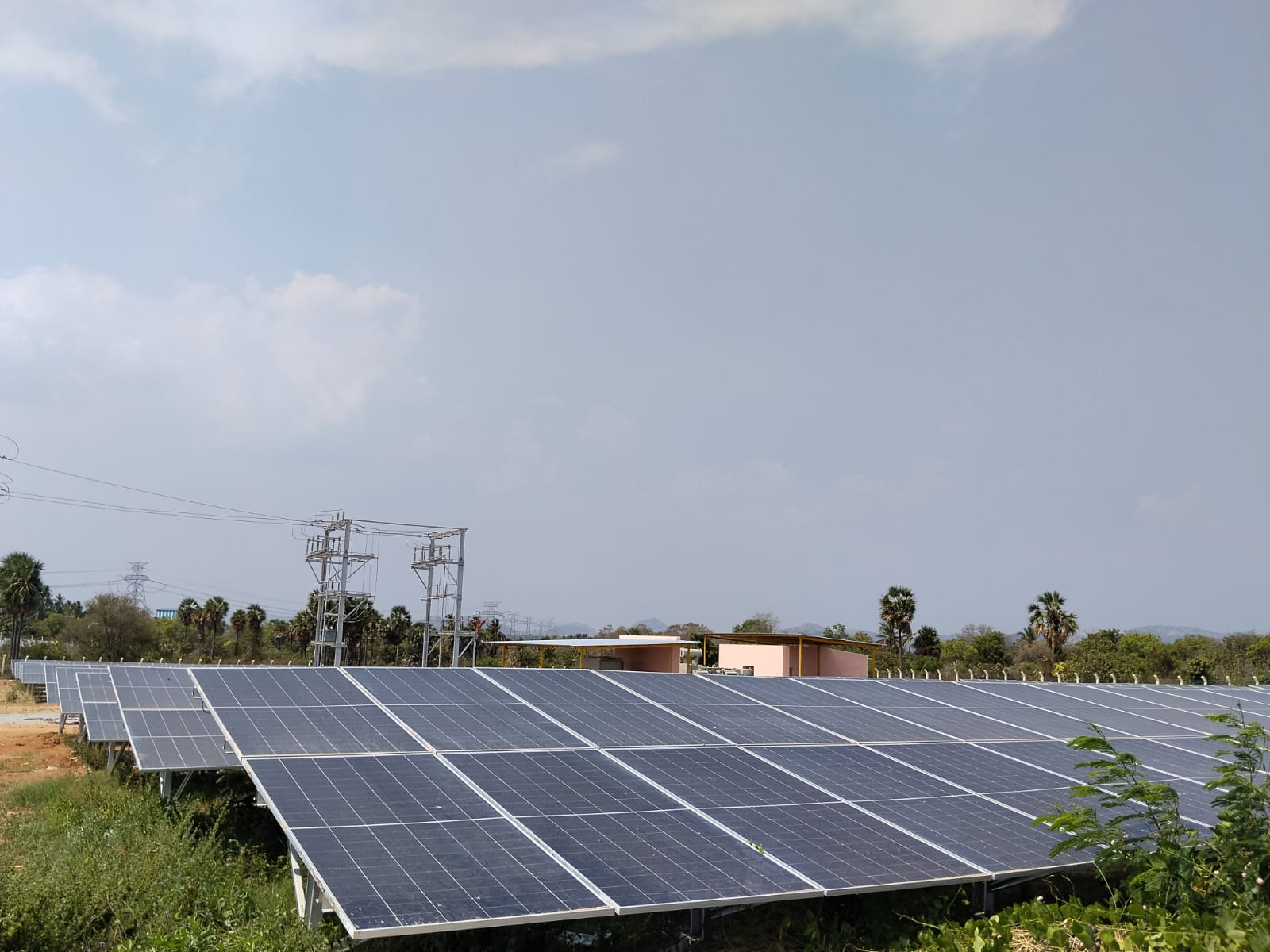
Structural support columns and mounting rails.
Panel clamps and fastening components.
Foundations or ground anchoring systems.
Bracing and structural connections.
Cable routing provisions and maintenance access.
When land is available
Ground mounted solar panels offer flexibility for projects with suitable land availability. Unlike rooftop installations, their placement can be planned around site conditions, panel orientation, and access requirements.
The mounting design can be selected to suit the available land, sunlight exposure, and project layout.
Ground-mounted systems can accommodate different project sizes, subject to land availability, engineering requirements, and electrical infrastructure.
Panels installed at accessible heights and with suitable spacing can be easier to inspect and maintain.
Ground-mounted systems may be appropriate when roof space, roof strength, or rooftop configuration limits solar installation options.
Fixed-tilt structures and suitable tracking systems can be evaluated according to project objectives, site constraints, and lifecycle costs.
Actual energy generation and project economics depend on system design, shading, equipment selection, installation quality, and operating conditions.
Strength and corrosion
Selecting the right solar panel mounting structure material is important for durability, structural performance, and resistance to environmental exposure.
Frequently considered for its structural strength and protective zinc coating. The appropriate coating and steel specifications depend on the site and design requirements.
May be suitable for projects requiring robust corrosion protection, including locations with challenging environmental exposure.
Offers a lightweight alternative for suitable mounting applications, depending on the required loads, connections, and system design.
For solar installations in Chennai, Tamil Nadu, material selection should consider humidity, rainfall, coastal salt exposure where applicable, and expected maintenance requirements.
There is no single material that is best for every project. Structural calculations, corrosion protection, fabrication quality, and compatibility with the selected solar modules should guide the final decision.
Site before steel
A well-planned ground mount solar structure design starts with understanding the site and the project's technical requirements.
Soil strength, drainage, groundwater conditions, and ground stability influence the selection of foundations or anchoring methods.
The structure must be designed for applicable site-specific wind loads, with appropriate consideration of panel uplift, connections, and bracing.
Panel positioning should reflect the site's solar resource, shading conditions, and energy-generation objectives.
Materials and protective finishes should be selected according to the installation environment, particularly in coastal areas.
Appropriate row spacing supports maintenance access and helps manage inter-row shading.
Earthing, bonding, cable management, and related electrical provisions must follow the approved system design and applicable requirements.
Professional site assessment and engineering help ensure that the mounting system is appropriate for the proposed installation.
Weather, soil, and the coast
Tamil Nadu offers opportunities for solar installations across industrial facilities, commercial properties, and suitable open-land sites. However, every location has different engineering requirements.
Ground-mounted solar projects should account for local weather exposure, seasonal rainfall, soil characteristics, and site-specific wind conditions. Installations near the coast may require particular attention to salt exposure and corrosion protection.
Businesses planning ground-mounted solar panels should also assess land availability, access roads, drainage, shading, grid connectivity, and relevant project approvals before finalising the design.
Choosing suitable solar mounting structures in Tamil Nadu begins with a clear understanding of the project location and operating requirements.
A starting point
Kyra Photon Tech specialises in promoting, developing, and implementing renewable energy technologies. The company also presents Rooftop solar mounting solutions and a single-axis tracker system for ground-mounted solar projects.
For businesses evaluating a ground-mounted solar installation, Kyra Photon Tech can be a starting point for discussing project requirements and identifying suitable solar solutions. The appropriate mounting option will depend on the intended application, site conditions, and engineering specifications.
When evaluating a solar mounting solution, consider:
Suitability for the proposed project and site.
Structural design and material requirements.
Corrosion protection for the installation environment.
Installation, inspection, and maintenance access.
Compatibility with the selected solar modules and system layout.
What to have ready
Planning a ground-mounted solar project in Tamil Nadu? Start by discussing your site conditions, proposed system capacity, and mounting requirements with a solar solutions provider.
To help assess your project, prepare details such as your installation location, available land area, estimated solar capacity, and preferred installation timeline.
Visit kyraphoton.com or call 044-3531-1888 to discuss your requirements and explore suitable solutions.
The best mounting structure depends on whether the panels will be installed on a rooftop or on the ground, along with the site conditions, structural loads, material requirements, and budget. For ground-mounted projects, the design should account for foundations, wind loads, corrosion protection, and panel orientation.
Tamil Nadu sites
Contact Kyra Photon Tech to discuss your ground-mounted solar project and request further information.
Share the installation location, available land, estimated capacity, and the timeline you have in mind.
Contact Kyra Photon Tech to discuss your site conditions, proposed capacity, and mounting requirements.